Swine Flu, also known as H1N1 influenza, is a contagious viral infection that affects the respiratory system, including the nose, throat, and lungs. It spreads from person to person through droplets released when an infected person coughs, sneezes, or talks.
Most people recover with appropriate medical care and rest, but young children, older adults, pregnant women, and individuals with weakened immune systems are at a higher risk of complications.
Common Symptoms of Swine Flu
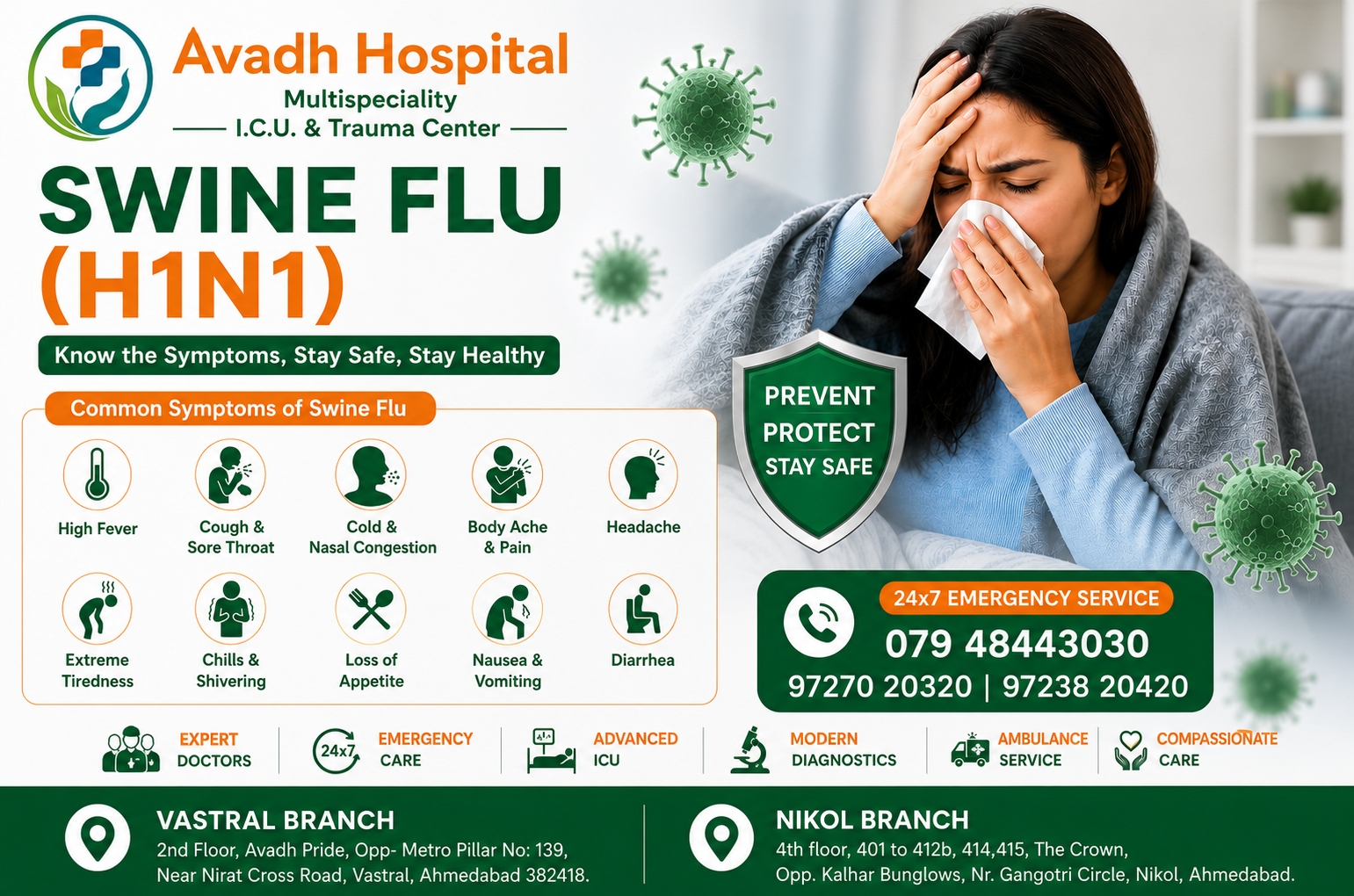
As highlighted in our awareness campaign, common symptoms include:
- High fever
- Persistent cough
- Cold and nasal congestion
- Sore throat
- Body aches
- Headache
- Extreme tiredness
- Difficulty breathing
- Chills
- Loss of appetite
Some patients may also experience:
- Nausea
- Vomiting
- Diarrhea
Symptoms can vary from mild to severe, and not everyone will experience every symptom.
What Causes Swine Flu?
Swine Flu is caused by the Influenza A (H1N1) virus. The virus spreads through respiratory droplets and by touching contaminated surfaces followed by touching the eyes, nose, or mouth.
How Does Swine Flu Spread?
The virus can spread through:
- Coughing and sneezing
- Close contact with an infected person
- Touching contaminated surfaces
- Crowded indoor environments
- Poor hand hygiene
Who is at Higher Risk?
Certain individuals are more likely to develop serious complications, including:
- Children under 5 years
- Adults over 65 years
- Pregnant women
- People with diabetes
- Patients with heart disease
- Asthma or chronic lung disease
- Kidney disease
- Cancer patients
- Individuals with weakened immune systems
How is Swine Flu Diagnosed?
Doctors may recommend:
- Clinical examination
- Medical history review
- Influenza testing
- RT-PCR test (when clinically indicated)
- Blood investigations (if required)
- Chest X-ray (if complications are suspected)
Early diagnosis allows timely treatment and appropriate monitoring.
Treatment for Swine Flu
Treatment depends on the patient’s symptoms, overall health, and clinical assessment. Your doctor may recommend:
- Adequate rest
- Plenty of fluids
- Medicines to reduce fever and relieve symptoms
- Antiviral medication when clinically appropriate
- Oxygen therapy or hospitalization in severe cases
Avoid self-medicating with antibiotics unless prescribed by a healthcare professional, as antibiotics do not treat viral infections.
How Can You Prevent Swine Flu?
You can reduce your risk by:
- Washing your hands regularly with soap and water
- Using alcohol-based hand sanitizer when needed
- Covering your mouth and nose while coughing or sneezing
- Wearing a mask in crowded places during outbreaks
- Avoiding close contact with people who are ill
- Staying home if you are sick
- Cleaning frequently touched surfaces
- Following your doctor’s advice regarding influenza vaccination, if recommended
When Should You Visit a Hospital?
Seek medical attention immediately if you experience:
- Difficulty breathing
- Persistent high fever
- Chest pain
- Severe dehydration
- Confusion or drowsiness
- Bluish lips or face
- Persistent vomiting
- Symptoms that worsen after initially improving
Children, elderly individuals, pregnant women, and people with chronic medical conditions should seek medical advice early if they develop flu-like symptoms.
Why Choose Avadh Multispeciality Hospital?
At Avadh Multispeciality Hospital, we provide prompt evaluation and treatment for viral illnesses, including influenza-like infections. Our experienced medical team offers accurate diagnosis, supportive care, and guidance to help patients recover safely while reducing the risk of complications.